Customized Risk Assessment: How To Identify Potential Threats For Your Business
Why Every Business Needs a Security Risk Assessment
When it comes to business security, knowing you need to do something and knowing what to do are two very different things. A risk assessment bridges that gap. Through specific questions, a risk assessment gives you an honest look at your business, identifying the kinds of threats that are realistic, given your location and industry. The goal is to work through those questions carefully so that the answers don't catch you off guard later.
At A1 Security, we've been providing commercial security services for businesses across Burlington and the greater Southern Ontario area for over 35 years. We've found that the most effective security solutions start with understanding the specific situation first. What follows are the key risk assessment points that we walk through with every client.
What Is a Business Security Risk Assessment?
A risk assessment starts as a conversation. We bring decades of experience and an understanding of the entry points that potential intruders exploit most often. The client brings knowledge of their own operation. The best results come when both sides are engaged.
When we walk through a facility with a new client, we're looking at how the business operates as much as we're looking at the physical space. How do deliveries come in? Who escorts visitors through the building? Are there areas that should be restricted but aren't? The goal is to understand the operation first because that's where vulnerabilities tend to hide.
Step 1: Identify Your Assets and What's Worth Protecting
When most business owners think about what they're protecting, they think about inventory and cash. Those are the obvious starting points, but they may not be considering the whole picture. People are an asset too, and often the most important one to think through carefully. So before any conversation about systems or solutions, we start by asking: what does this business actually need to protect, and what would the real cost be if it were compromised?
Step 2: Recognize the Types of Threats Facing Your Business
Once you have a clear sense of what you're protecting, the next step is understanding what you're protecting it from. Threats to a business tend to come in a few different forms, and some are less obvious than you might expect.
External threats are the most intuitive. For example, a restaurant had a habit of leaving its receiving door open during operating hours. One morning, a group came in through that receiving door, locked the staff in a cooler, and cleaned the place out. Although no one was injured, the experience was traumatic and entirely preventable. The open door was so routine that nobody thought of it as a vulnerability. That's how most incidents happen.
Environmental threats are worth considering, too. Poorly lit entry points and improperly stored garbage bins create cover for opportunistic damage that has nothing to do with theft. We worked with a library that had recurring issues with people setting materials on fire through the book return slot. It sounds unlikely, but the cost and disruption were very real.
Step 3: Evaluate Your Current Security Measures
When we evaluate an existing business security system, we're looking for whether it would actually catch something in progress and trigger a response quickly enough to make a difference. That's the standard every system should be held to, and it's where a lot of existing setups fall short.
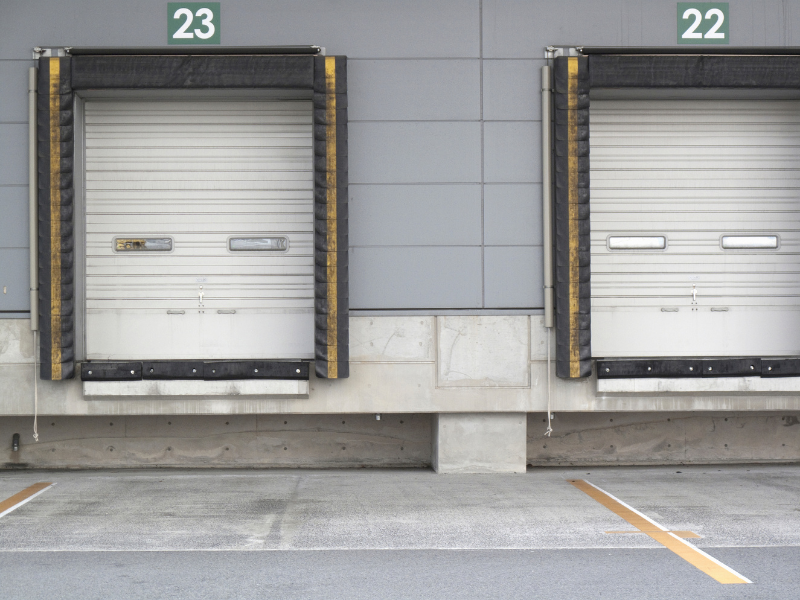
The most common gap we see when auditing a business with a security system in place is that they do not have enough sensors and detectors. It's easy to assume that what's there is sufficient, but entry points are often more vulnerable than they appear. A glass commercial entrance door, for example, is not much of a barrier. Someone can get through it and move through your space very quickly. Loading bay overhead doors present a similar problem because they can be forced open more easily than most people expect.
Step 4: Prioritize Risks and Build a Mitigation Plan
Once you have a clear picture of your vulnerabilities, the question becomes where to start. For most businesses, a professional intrusion detection and alarm system is the right first investment. It's cost effective and largely runs itself. You might not need to get rid of your glass door, for example. Even if it only takes seconds to get through, if the right detectors are in place, the monitoring station will alert you immediately if there is a threat. Getting that foundation right is what everything else depends on.
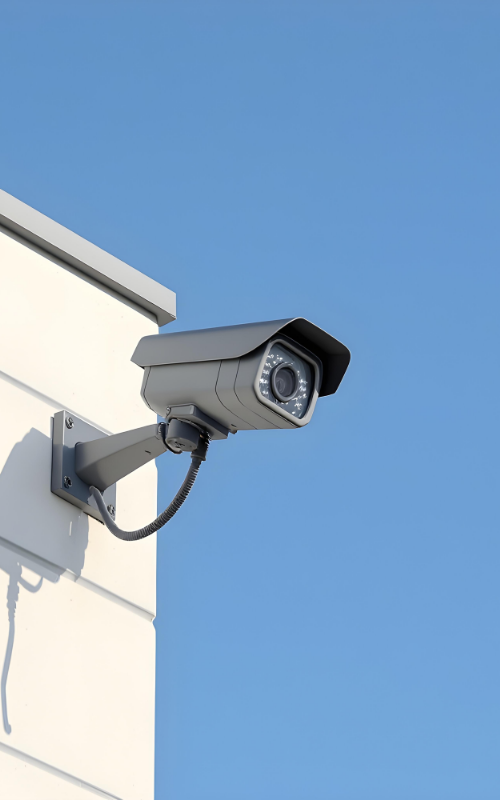
The next layer to consider is video surveillance with proactive alerts, which can notify you when someone is approaching your property before they get in. Security cameras positioned at key entry points offer an earlier point of detection. The earlier you detect a potential threat, the less you have to deal with on the other side of it.
An access control system is worth considering as part of that layered approach, too. Secure access to restricted areas adds a meaningful layer of physical security, particularly for businesses with high-value inventory or sensitive information on site.
The right combination depends on the specific operation, which is why we start every client relationship with a conversation about how the business runs before we talk about solutions. The goal is to match the security to the actual risk.
Take the First Step Toward a Safer Business
A risk assessment is not a complicated process, but it is an important one. Together we're taking stock of what you have, understanding where the gaps are, and putting the right measures in place to address them. The businesses that do this well are the ones that don't have to learn about their vulnerabilities the hard way.
At A1 Security, we start every new client relationship the same way: with a conversation. We want to understand how your business operates before we talk about solutions. If you're thinking about where your business stands from a security perspective, we're happy to be that outside set of eyes. Give us a call and we can take it from there.
Frequently Asked Questions
How long does a security risk assessment take?
Every facility is different, but the initial walkthrough and conversation typically doesn't take long. The goal is to understand your security needs and where the vulnerabilities are, not to narrowly focus on a pre-determimed checklist.
How often should we reassess our security?
Any time there's a significant change to your operation, it's worth a fresh look. A new location, a renovation, or growth in the number of people moving through your facility can all change your risk profile in ways that aren't immediately obvious.
We already have a security system. Do we still need an assessment?
Having a system in place is a good start, but it doesn't always mean you have the right coverage. Entry points are often more vulnerable than they appear, and detector placement matters as much as the technology itself.
What's the most important thing a business can invest in first?
For most businesses, a commercial security system with professional alarm monitoring is the right starting point. It's cost effective, it works around the clock, and when something happens, the monitoring station responds according to procedure without any involvement from you.
Is security something we manage on our own once it's installed?
The system largely runs itself, but we're always reachable when there are questions or concerns. That accessibility is something our clients tell us matters a great deal, and it's something we take seriously.
How is A1 Security different from other security companies?
We don't lock clients into long term contracts, and we bench test any technology before we recommend it. Our clients stay with us because the solutions work, not because they're obligated to.
A1 Security Systems is a security solutions provider that works with business owners who want to protect their property and their people. We ensure their security 24/7 so they feel safe and comforted in the knowledge that our dedicated security team has got their back. Unlike our competitors we don’t force our clients into long term contracts, and we can handle complex security requirements throughout Canada. Read more about our services on https://www.a1securitysystems.ca/

